Most people will suffer back pain at some point in their lives. This is not to say that you should accept your pain as a normal, unavoidable part of life.
Back pain can make it difficult to reach, lean, kneel, lift, or bend. It can also make it difficult to spend time with friends and family. Lower back pain, if left untreated, can cause long-term pain, dysfunction, and even nerve damage in some people.
This is why it is critical to be proactive in treating back pain. You can find solutions to your pain and learn how to manage it with the help of your physical therapist, allowing you to avoid long-term damage.
What factors contribute to back pain?
Mechanical low back pain arises from the spine and its surrounding structures. The pain you feel is caused by an injury or irritation of the muscles, joints (including the intervertebral discs and facet joints), nerves or surrounding ligaments, and other soft tissue.
Back pain is frequently associated with the following factors:
- Improper posture or prolonged positions (i.e. prolonged sitting)
- Spinal muscle and tissue damage (i.e. lifting strains or trauma from accidents)
- Limited hip, spine and pelvis mobility
- Limited muscle flexibility
- Spinal/pelvic muscle weaknesses (aka “core” weakness)
- Poor abdominal, pelvic and back muscle coordination (i.e. compensations due to injury)
Unfortunately, many people do not seek treatment when they experience back pain. They may believe nothing, except medication and rest, can alleviate their back pain. However, there is little to no evidence that acetaminophen, skeletal muscle relaxants, or lidocaine patches are effective in treating chronic low back pain.
On the other hand, physical therapy has been proven repeatedly to help relieve back pain and restore function.
Physical therapy is a safe, natural, and effective treatment option.
According to research, physical therapy treatments for back pain are effective for both acute and chronic conditions. Physical therapy treatments for back pain include manual therapy, joint mobilization manipulation, exercise instruction, education, and techniques such as the McKenzie Method and therapeutic yoga. All of these have been shown to help with pain relief and function restoration.
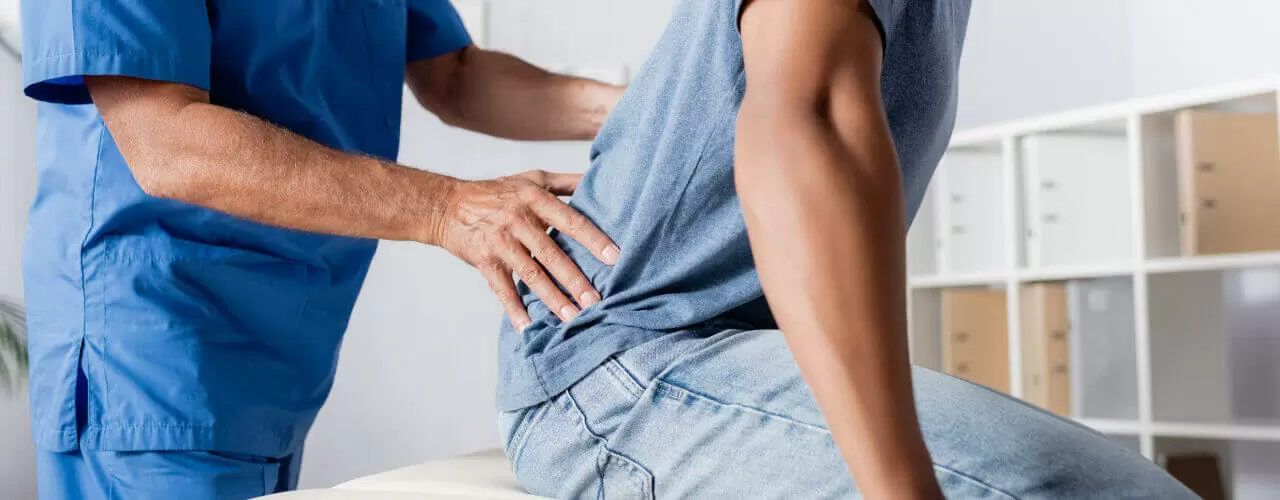
Physical therapists assess your condition to identify and address all factors contributing to your back pain. Instead of focusing on a single source of pain, your physical therapist will address them all.
Our physical therapists at Care360 Physical Therapy are skilled in hands-on intervention and exercise selection. As a result, you can be confident that you will receive the most comprehensive and appropriate treatment plan to assist you in resolving your pain and restoring your function.
How to prevent back pain
Not only can your physical therapist relieve your back pain, but they can also ensure that it returns less frequently. Your physical therapist may recommend the following practices to prevent back pain.
1. Limit Sitting For Too Long
Prolonged sitting is not good for your back or your overall health. Although adjusting your posture while sitting can be beneficial, standing up regularly throughout the day is a more effective option.
Try to sit for no more than 30-45 minutes. You’ll be surprised by the results!
2. Use Good Posture
Because our spine is designed to move, so should our posture. The spine does not like to stay in one position for long periods. Most people slouch and then remain in that position for long periods. You can counteract the slouch by finding a “good” posture.
Imagine your breast bone is lifted towards the sky as you stand. This will naturally straighten your spine, lifting you and keeping your hips, spine, shoulders, and neck aligned.
3. Use Strength Training
There are hundreds of muscles in your body. Your spine is protected and controlled by these muscles. You can keep them strong by lifting weights, running, and swimming. Train the muscles in your hips, pelvis, and spine, also known as your core muscles.
Make an appointment with Care360 Physical Therapy right away!
Though back pain can sometimes resolve independently, it is never a good idea to ignore pain signals in your body. Be proactive in your treatment by visiting a Miami, FL, physical therapist for a thorough evaluation.
In this section, you’ll learn how to relieve your pain and avoid future episodes. Consult a physical therapist if you have a history of back injuries, pain, or minor aches. We look forward to treating you!
Sources:
- https://pubmed.ncbi.nlm.nih.gov/30252425/
- https://pubmed.ncbi.nlm.nih.gov/32669487/
- https://pubmed.ncbi.nlm.nih.gov/29602304/
- https://www.cochranelibrary.com/cdsr/doi/10.1002/14651858.CD006555.pub2/full?highlightAbstract=back%7Cexercise%7Cpain%7Cexercis
- https://www.cochranelibrary.com/cdsr/doi/10.1002/14651858.CD004057.pub3/full?highlightAbstract=back%7Cpain
- https://pubmed.ncbi.nlm.nih.gov/27285608/
- https://www.ncbi.nlm.nih.gov/pmc/articles/PMC2200681/
- https://www.health.harvard.edu/pain/dont-take-back-pain-sitting-down