Back pain is one of the most common reasons people seek physical therapy, affecting millions of adults across the U.S. every year. Whether it stems from poor posture, muscle strain, spinal joint stiffness, or prolonged inactivity, the discomfort can interfere with everything from work to sleep. Many people try rest, heat, or over-the-counter medication with only limited relief. That’s where manual therapy for back pain comes in—offering targeted, evidence-informed treatments that address not just symptoms, but the root causes of discomfort.
At Care360 Physical Therapy, our physical therapists use manual therapy techniques to help reduce pain, improve mobility, and support long-term recovery without relying solely on medication. If you’ve been dealing with ongoing back pain or a recent flare-up, it may be time to consider a more hands-on approach to healing.
Understanding the Problem: Symptoms and Common Struggles
Back pain is not one-size-fits-all. It can vary in location, intensity, and duration, and often changes throughout the day. Some people feel a dull ache in the lower back after sitting too long, while others may experience sharp pain when bending, twisting, or lifting.
Common back pain symptoms include:
- Muscle tightness or spasms
- Reduced flexibility and range of motion
- Pain radiating into the legs or hips
- Discomfort during walking, standing, or transitioning between positions
- A sense of instability or weakness in the core or lower back
Many patients assume their back pain is a “normal part of aging” or something they just have to live with. Others worry that movement will make it worse, leading to even more inactivity and stiffness.
The truth is, without proper intervention, back pain can become a cycle of discomfort and limitation. That’s why manual therapy for back pain is so effective, it helps interrupt that cycle and restores normal, pain-free movement.
How Manual Therapy for Back Pain Provides Relief and Function
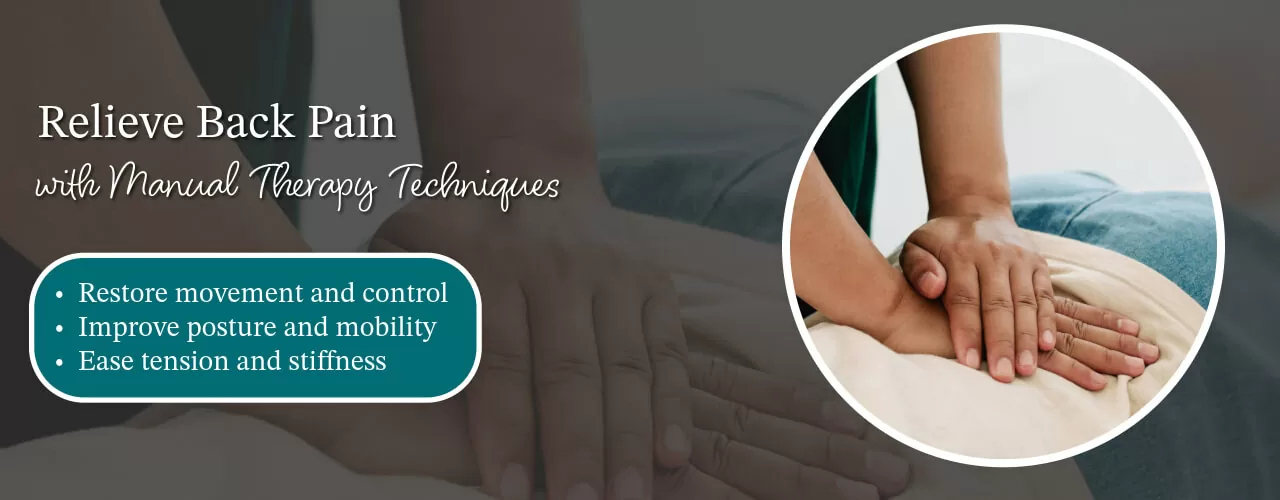
Manual therapy is a hands-on treatment method used by licensed physical therapists to address restrictions in joints, muscles, and connective tissue. At Care360 Physical Therapy, we evaluate each patient’s movement patterns and symptoms to determine where dysfunction exists, and then apply targeted techniques to reduce pain and improve motion.
Here’s how manual therapy for back pain supports recovery:
1. Joint Mobilization for Spinal Stiffness
Back pain often stems from limited movement between the vertebrae. Joint mobilizations are gentle oscillating movements applied to the spinal joints to restore motion and reduce stiffness. These techniques can help decompress irritated structures and relieve tension in the surrounding tissues.
2. Soft Tissue Mobilization for Muscle Tightness
Tight or overworked muscles in the back can become painful and restrict movement. Soft tissue techniques focus on loosening tight fascia and muscle fibers, improving blood flow, and reducing tension that contributes to pain. This also helps restore natural movement patterns.
3. Myofascial Release for Deep Restrictions
The fascia is the connective tissue that surrounds muscles and organs. When this tissue becomes restricted due to injury or chronic stress, it can create pain and movement limitations. Myofascial release gently targets these areas to promote better mobility and reduced discomfort.
4. Manual Stretching for Flexibility
Targeted manual stretching, especially in the hips, lower back, and hamstrings, can ease pressure on the spine and reduce compensatory movement patterns that contribute to pain. Your physical therapist may use assisted stretching techniques to restore flexibility without strain.
Lifestyle Adjustments to Support Healing
In addition to in-clinic care, patients can improve outcomes by adopting simple changes at home. Our therapists at Care360 Physical Therapy commonly recommend the following:
Daily Movement
- Incorporate gentle walks or light stretching every day to prevent stiffness.
Ergonomic Setup
- Adjust workspaces to support upright posture, especially during long periods of sitting.
Use Proper Body Mechanics
- Learn and apply safe lifting techniques and strategies to avoid twisting under load.
Heat Before, Cold After
- Apply heat before physical activity to loosen tissues, and ice after to manage pain.
Sleep Position Awareness
- Use pillows to support neutral spine alignment, particularly when sleeping on your back or side.
These strategies complement manual therapy and help maintain progress between sessions.
Why Manual Therapy is Different from Passive Rest
One of the most common misconceptions is that back pain will simply go away with rest. While short-term rest may help acute pain, long-term inactivity can actually make the problem worse. Muscles weaken, joints stiffen, and pain becomes more entrenched.
Manual therapy for back pain offers a proactive, movement-focused solution. It directly addresses the tissues and structures involved in your symptoms and helps restore normal function. Rather than covering up pain with medication or immobilizing the area, manual therapy works with your body’s natural healing processes.
Regain Comfort and Confidence with Personalized Care
At Care360 Physical Therapy, we know that back pain can be physically and emotionally draining, but it’s also highly treatable. Our physical therapists are trained in a range of manual therapy techniques that are safe, effective, and tailored to your specific condition.
Whether your pain started recently or has been with you for years, manual therapy for back pain can be the turning point in your recovery. Combined with a personalized rehabilitation plan and lifestyle coaching, our approach is designed to get you moving again, with less pain and more confidence.
Contact Care360 Physical Therapy today to schedule your evaluation and begin a care plan that puts you back in control of your health. Let us help you move better, feel stronger, and enjoy life with fewer limitations.